Electrician Pathway: Qualifications, Licensing and Career Progression
Are you considering a career in the electrical industry?
Electrician apprenticeships are a great way to gain hands-on experience while earning a nationally recognised qualification. There are various certificates to choose from: from general electrical work, telecommunications, and automation, to renewable energy, including Certificate III in Air Conditioning and Refrigeration for those interested in climate control systems.
An apprenticeship in electrical work can open doors to a wide range of opportunities, including upskilling in emerging technologies.
In this guide, we’ll break down the electrician apprenticeship journey, including key qualifications, career specialisations, and long-term opportunities in the field. If you are ready to start now, see our electrical apprenticeships.
The Electrician Apprenticeship Pathway
An apprenticeship for electricians is a good starting point for a hands-on career with strong job prospects. Through structured training and real-world experience, electrician courses can equip you with the skills to work in residential, commercial, and industrial electrical environments.
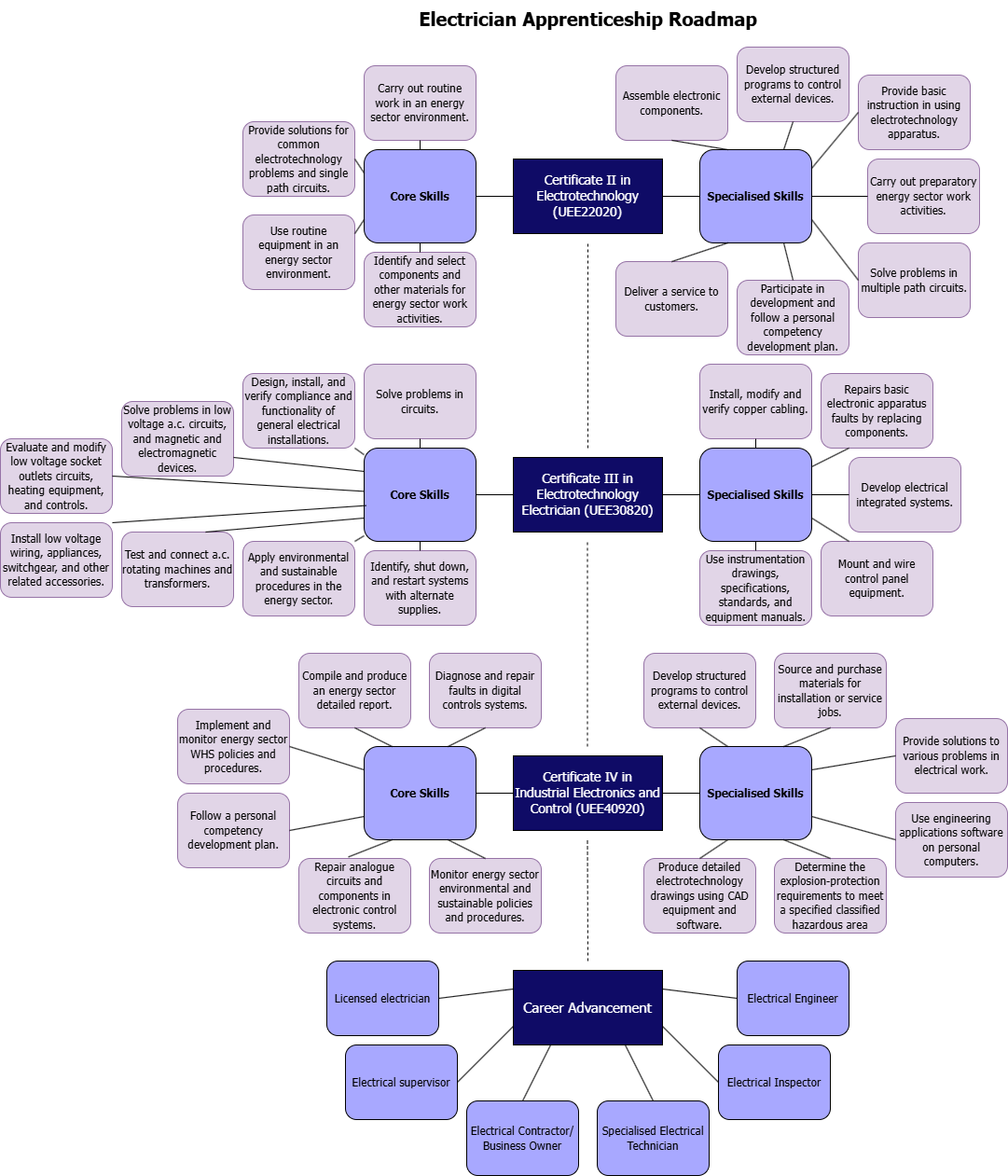
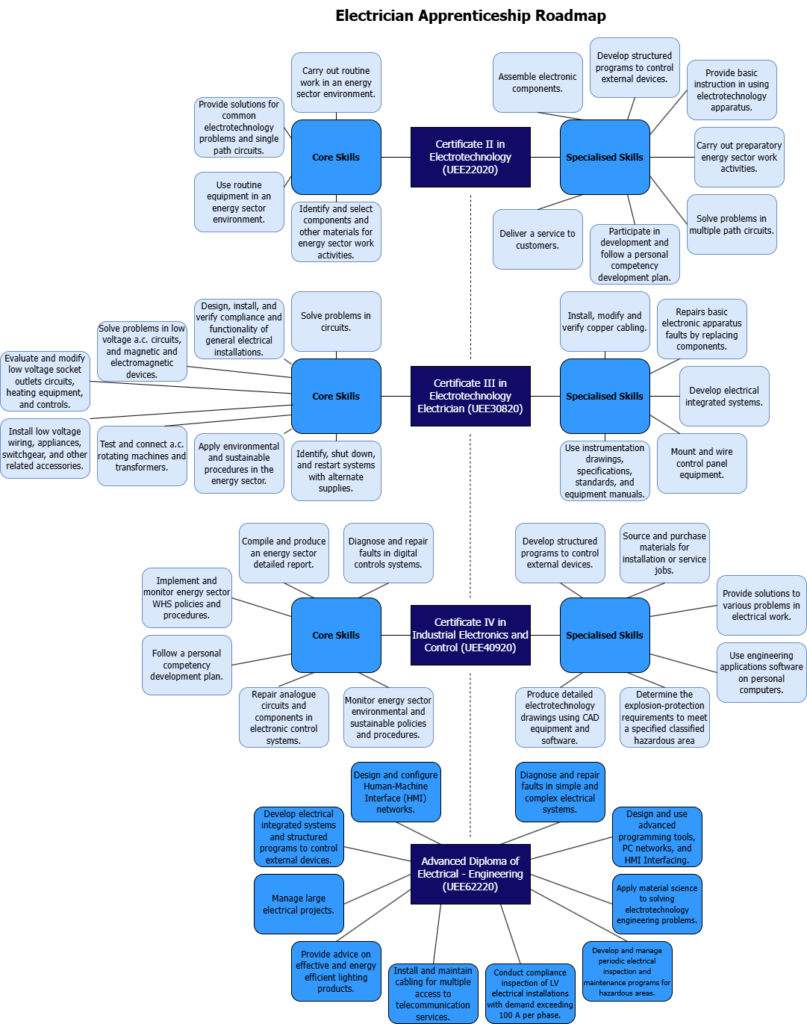
The electrician qualifications pathway, step by step:
- Certificate II (optional pre-apprenticeship): an introduction to electrical work that can help you secure an apprenticeship.
- Certificate III in Electrotechnology Electrician (UEE30820): the core trade qualification, completed as a paid apprenticeship over around four years. See the Certificate III in Electrotechnology Electrician.
- Electrical licence: once your apprenticeship is complete, you apply for a licence through your state or territory regulator.
- Certificate IV: further study for licensed electricians moving into specialised or systems work.
- Diploma and Advanced Diploma: for electricians moving into design, engineering support, project or management roles.
You can expect to acquire the following skills throughout the entire apprenticeship pathway:
- Install wiring systems, accessories, and appliances for low-voltage general electrical installations.
- Connect electrical circuits.
- Solve issues with electrical equipment.
- Use routine equipment/plant/technologies in an energy sector environment.
- Implement safe work practices.
- Fault find and fix digital and analogue circuits and components in electronic and digital control systems. (For those who prefer working with digital and analogue circuits, Certificate III in Electronics and Communications covers troubleshooting and maintaining communication systems.)
- Create and develop structured programs in programmable logic controllers (PLC) to control external devices.
- Use and operate engineering software programs.
- Develop and write engineering reports with relevant statistical analysis.
- Write specifications for electrotechnology and electrical engineering projects
- Develop design briefs and manage risk in electrotechnology activities
- Produce energy sector detailed reports
- Provide engineering solutions for complex electrical problems in power circuits.
Career Progression After Certification
After completing Certificates III and IV, there are multiple career pathways in electrical and electrotechnology fields. These roles can be, but are not limited to:
- Electrical Supervisor/Manager. They oversee teams of electricians, manage projects, and ensure safety and compliance.
- Project Manager. They manage large-scale electrical projects in construction, infrastructure, or renewable energy sectors.
- Electrical Engineer. They primarily design electrical systems, control systems, or electrical equipment.
But if you’re interested in leadership roles or branching out into related industries (like automation or renewable energy), pursuing a Diploma or Advanced Diploma can help accelerate your career growth.
Ongoing Professional Development and Licensing
To continue advancing in electrical and electrotechnology, professionals must maintain up-to-date knowledge of industry standards, safety regulations, and technology advancements. This often requires:
- Continual education. We advise enrolling in short courses to keep up with new technologies, such as smart homes or electric vehicles.
- An electrical licence. Electrical licensing is state-based, and you apply once your apprenticeship is complete. In NSW, Building Commission NSW issues the electrical licence and qualified supervisor certificate, and applicants need a certificate of proficiency from the Vocational Training Review Panel, at least 12 months of wiring work experience and a National Police Check. In the ACT, Access Canberra issues the electrician licence and prioritises applicants who have completed their apprenticeship, including the capstone test. A separate contractor licence applies if you want to contract for electrical work in your own right.
- Safety training. Regular training for electrical safety standards is required, especially in high-risk environments.

The Benefits of Pursuing an Electrical and Electrotechnology Apprenticeship
Choosing an electrician apprenticeship isn’t just about learning a trade, it’s about securing a future in one of the most in-demand industries in Australia. Starting an apprenticeship in electrical work is a smart career move because of:
A high demand for skilled electricians
Australia has many growing infrastructure projects, expanding renewable energy, and an increasing reliance on electrical systems. Electricians are needed across multiple sectors, from new housing developments to advanced industrial automation.
The ongoing shift toward solar power, battery storage, and electric vehicle (EV) infrastructure also drives demand for skilled workers in emerging technologies.
Electrician (General) is on the 2026 Australian Apprenticeships Priority List, which means eligible apprentices can access additional government support payments while they train.
Strong job security
Electricians are essential workers. As industries evolve, there will always be a need for electrical installation, maintenance, and repairs. New buildings require wiring, electrical systems need to be upgraded over time, and telecommunications networks need to be maintained.
Qualified electricians enjoy stable, long-term career prospects. Even during economic downturns, skilled tradespeople remain in demand.
Competitive earning potential
A career in electrical and electrotechnology offers wage increases as you gain experience and qualifications.
Apprentices start earning while they learn, and after completing a Certificate III in Electrotechnology Electrician (UEE30820), they can work as licensed electricians with salaries that may go above the national average. Specialising in high-demand areas like instrumentation, automation, or renewable energy can further boost earning potential.
Diverse career pathways
One of the biggest advantages of an electrician apprenticeship is the multiple career paths available. Depending on your interests, you can work in:
- Residential Electrical Work: Installing and maintaining wiring, lighting, and security systems in homes.
- Commercial and Industrial Electrical Systems: Working on large-scale projects such as office buildings, factories, and power plants.
- Automation and Control Systems: Specialising in smart technology, robotics, and industrial automation. A Certificate III in Instrumentation and Control provides the foundation for working with smart technology and industrial automation.
- Telecommunications and Data Networks: Installing and maintaining data cabling, fibre optics, and wireless communication systems. A Certificate III in Telecommunications Technology is the trade qualification for this career path.
- Renewable Energy and Sustainability: Specialising in solar, wind, and battery storage systems to support Australia’s green energy future.
The ability to future-proof skills in an evolving industry
New technologies shape the way electrical systems operate. Electricians are at the forefront of technological advancements, from smart home automation to EV charging stations. An apprenticeship equips you with skills that adapt to industry changes, so you can have long-term career growth.
How to Start an Apprenticeship in the Electrical and Electrotechnology Industry
- 1300apprentice connects you with a host employer: Instead of searching for an employer on your own, we match you with an electrical company or contractor.
- 1300apprentice enrols you in an accredited training program: Your apprenticeship includes both practical work and theoretical study. We organise your training with a Registered Training Organisation (RTO), such as TAFE, and guide you through the process. Certificate III in Electrotechnology Electrician is the standard pathway for those looking to become licensed electricians.
- Apprenticeship duration: An electrician apprenticeship usually takes around four years full time. In every state and territory the nominal term is 48 months full time, and part-time terms run longer. It blends structured coursework with real-world experience to help you develop the skills needed for a successful career.
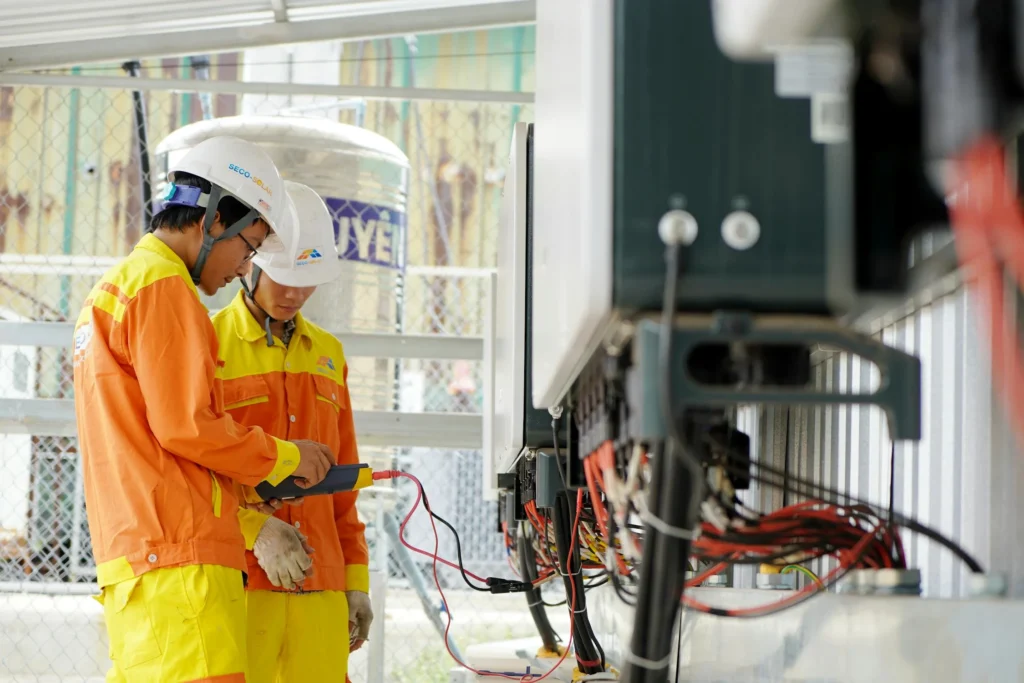
Take the First Step Towards a Fulfilling Career
If you’re keen to start your journey as an electrical apprentice, 1300apprentice can help you find the right pathway.
Browse our apprenticeship opportunities or contact us to get started today!
Frequently Asked Questions
What qualifications do you need to be an electrician in Australia?
The qualification you need to be an electrician in Australia is the Certificate III in Electrotechnology Electrician (UEE30820), completed as an apprenticeship. Once you finish it, you apply for an electrical licence through your state or territory regulator. Further qualifications such as a Certificate IV, Diploma or Advanced Diploma are optional and help you move into specialised or senior roles.
Can you become an electrician without an apprenticeship?
You generally cannot become a fully licensed electrician in Australia without an apprenticeship. The national qualification states that an unrestricted electrician’s licence in most jurisdictions requires the Certificate III to be completed as an apprenticeship or through a Trades Recognition Australia pathway, which is for people who already have overseas trade experience.
What can you do after a Certificate III in Electrotechnology?
After a Certificate III in Electrotechnology you can work as a licensed electrician once your state licence is issued, then build your electrician career by specialising or studying further. Common next steps are maintenance, industrial or renewable energy work, a Certificate IV for systems work, supervising a team, or starting your own business with a contractor licence.